
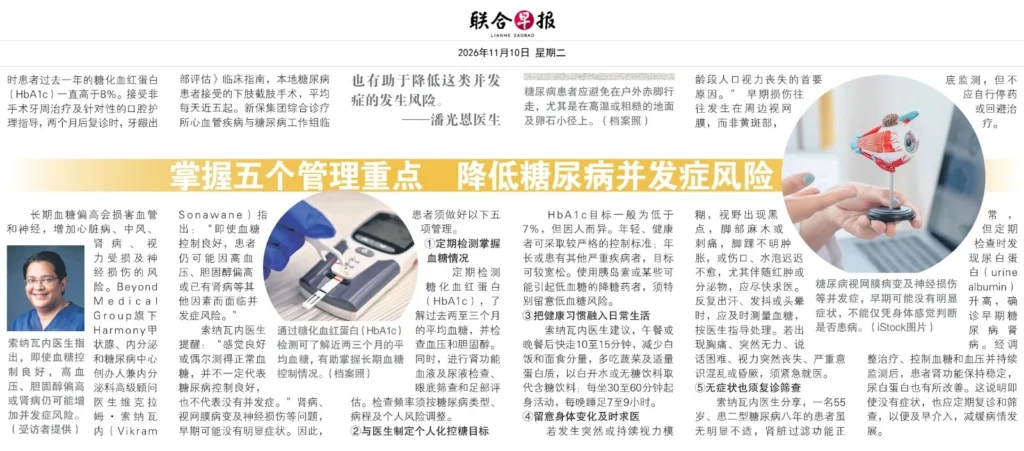
In Lianhe Zaobao on 10 November 2026, Dr Vikram Sonawane, Senior Consultant Endocrinologist and Founder of Harmony Thyroid, Endocrinology and Diabetes Centre, shared how patients can manage diabetes and reduce their risk of complications.
Key Takeaways from Dr Vikram’s Lianhe Zaobao Feature
1. Blood sugar is only one part of diabetes care.
Persistently high blood sugar can damage blood vessels and nerves, affecting the heart, kidneys, eyes and feet. Even when blood sugar is well controlled, high blood pressure, elevated cholesterol and existing kidney disease can still contribute to complications. These risks need to be managed together.
2. Feeling well does not mean complications are absent.
Early kidney disease, eye damage and nerve damage may develop without noticeable symptoms. An occasional normal blood sugar reading also does not necessarily reflect overall diabetes control. Regular checks remain important even when you feel well.
3. Understand what your routine checks are looking for.
Different assessments provide different information about your health:
- HbA1c: Reflects average blood sugar over the past two to three months.
- Blood pressure and cholesterol: Help assess cardiovascular risk.
- Kidney blood and urine tests: Check kidney function and look for early signs of damage.
- Eye screening: Checks for diabetes-related damage to the retina.
- Foot assessments: Check sensation, circulation and the risk of ulcers.
Your doctor can advise how often these checks are needed based on your diabetes type, duration and individual risks.
4. Your blood sugar target should be personalised.
An HbA1c below 7% is a general target, but it is not the right target for everyone. Younger, healthier patients may be suitable for tighter control, while older adults or those with significant illnesses may need less stringent targets. Treatment should also minimise the risk of low blood sugar, particularly with insulin or medications that can cause it.
5. Small, consistent daily habits support long-term management.
Dr Vikram recommends:
- Taking a brisk 10–15-minute walk after lunch or dinner.
- Moderating rice and noodle portions, eating more vegetables and adequate protein.
- Choosing water or unsweetened drinks instead of sugary beverages.
- Standing up or moving around every 30–60 minutes during prolonged sitting.
- Getting seven to nine hours of sleep each night.
6. Recognise changes that need medical attention.
Persistent blurred vision, dark spots in your vision, numbness or tingling in the feet, unexplained swelling, and wounds or blisters that do not heal should be assessed promptly, especially if there is redness or discharge.
Repeated sweating, trembling or dizziness may signal low blood sugar. Check your glucose and follow your doctor’s instructions.
Chest pain, sudden weakness, difficulty speaking, sudden vision loss, severe confusion or loss of consciousness require emergency medical attention.
7. Screening can uncover problems before you notice them.
Dr Vikram shared an example of a patient who felt well and had normal urine output, yet routine screening detected increased albumin in the urine, an early sign of diabetic kidney disease. Following treatment, blood sugar and blood pressure management, and continued monitoring, kidney function remained stable and urine albumin improved.
Do not wait for symptoms before taking action.
Ongoing diabetes care involves monitoring blood sugar, managing other health risks, maintaining healthy habits and attending regular follow-ups. Early detection allows treatment to begin sooner and can help slow the progression of complications.
For more insights from Dr Vikram, read the full article in Lianhe Zaobao (in Chinese).
糖尿病管理:不只是控制血糖
在2026年11月10日刊登的《联合早报》健康报道中,Harmony甲状腺、内分泌和糖尿病中心创办人兼内分泌科高级顾问医生维克拉姆·索纳瓦内(Dr Vikram Sonawane),分享了糖尿病日常管理及降低并发症风险的要点。
维克拉姆医生《联合早报》专访重点摘要
1. 控制血糖只是糖尿病管理的一部分。
长期血糖偏高会损害血管和神经,影响心脏、肾脏、眼睛及足部健康。即使血糖控制良好,高血压、胆固醇偏高及已有的肾脏疾病,仍可能增加并发症风险。因此,糖尿病管理需要同时关注这些因素。
2. 感觉良好,不代表没有并发症。
早期肾病、视网膜病变及神经损伤可能没有明显症状。偶尔测得正常血糖,也不一定代表整体血糖控制良好。即使身体没有不适,仍应定期检查。
3. 了解各项常规检查的作用。
不同的检查有助于了解身体不同方面的健康状况:
- 糖化血红蛋白(HbA1c): 反映过去两至三个月的平均血糖水平。
- 血压和胆固醇检查: 帮助评估心血管疾病风险。
- 肾脏相关血液及尿液检查: 评估肾功能,并寻找早期肾脏损伤的迹象。
- 眼底筛查: 检查是否出现与糖尿病相关的视网膜损伤。
- 足部检查: 评估足部感觉、血液循环及溃疡风险。
医生会根据糖尿病类型、病程及个人风险,建议合适的检查频率。
4. 血糖目标应根据个人情况制定。
HbA1c一般以低于7%为目标,但并非适用于每个人。年轻、健康状况良好的患者,可考虑较严格的控制目标;年长或患有其他严重疾病的患者,则可能需要较宽松的目标。
治疗也应尽量降低低血糖风险,尤其是使用胰岛素或可能引起低血糖药物的患者。
5. 持之以恒的小习惯,有助于长期管理。
维克拉姆医生建议:
- 午餐或晚餐后快走10至15分钟。
- 适量减少白饭和面食的分量,多吃蔬菜,并摄取适量蛋白质。
- 以白开水或无糖饮料代替含糖饮料。
- 久坐期间,每隔30至60分钟起身或走动。
- 每晚保持七至九小时睡眠。
6. 留意需要就医的身体变化。
若持续出现视力模糊、视野有黑点、脚部麻木或刺痛、不明原因的肿胀,以及伤口或水泡迟迟不愈合,应尽早就医。伤口若伴有红肿或分泌物,更应及时检查。
反复出汗、发抖或头晕可能是低血糖的表现,应及时测量血糖,并按照医生的指导处理。
若出现胸痛、突然无力、说话困难、视力突然丧失、严重意识混乱或昏厥,应立即寻求紧急医疗救助。
7. 定期筛查有助于在症状出现前发现问题。
维克拉姆医生分享,一名患者虽然没有明显不适,尿量也正常,但在常规筛查中发现尿白蛋白升高,提示早期糖尿病肾病。
经过治疗、血糖和血压管理,以及持续监测后,患者的肾功能保持稳定,尿白蛋白水平也有所改善。
不要等到出现症状,才开始重视糖尿病管理。
持续的糖尿病管理包括监测血糖、控制其他健康风险、保持健康生活习惯,以及定期复诊。及早发现问题,有助于及时治疗,并减缓并发症的进展。
欲了解更多维克拉姆医生的分享,请阅读《联合早报》完整报道。
Disclaimer: This article is for general informational purposes only and is not a substitute for professional medical advice. Please consult your doctor or healthcare provider for guidance specific to your health.