
Summary:
- Silent disease: Osteoporosis gradually reduces bone density without showing outward symptoms, making bones porous and prone to fractures from minor stress.
- High-risk movements: Yoga poses that involve extreme forward bends, deep twists, or inversions can place excessive strain on fragile bones and trigger fractures.
- Screening before practice: Individuals with warning signs like unexplained back pain, height loss, or other risk factors should undergo a bone density assessment before doing yoga.
- Safe modifications: Those with low bone density can safely practice by informing their instructor, avoiding high-risk poses, and focusing on slow, controlled, weight-bearing movementsWhile yoga can improve flexibility, balance, and overall wellbeing, some poses may be unsuitable for people with osteoporosis or low bone density. Understanding how bone fragility affects movement can help reduce fracture risk and support safer practice.
What Is Osteoporosis?
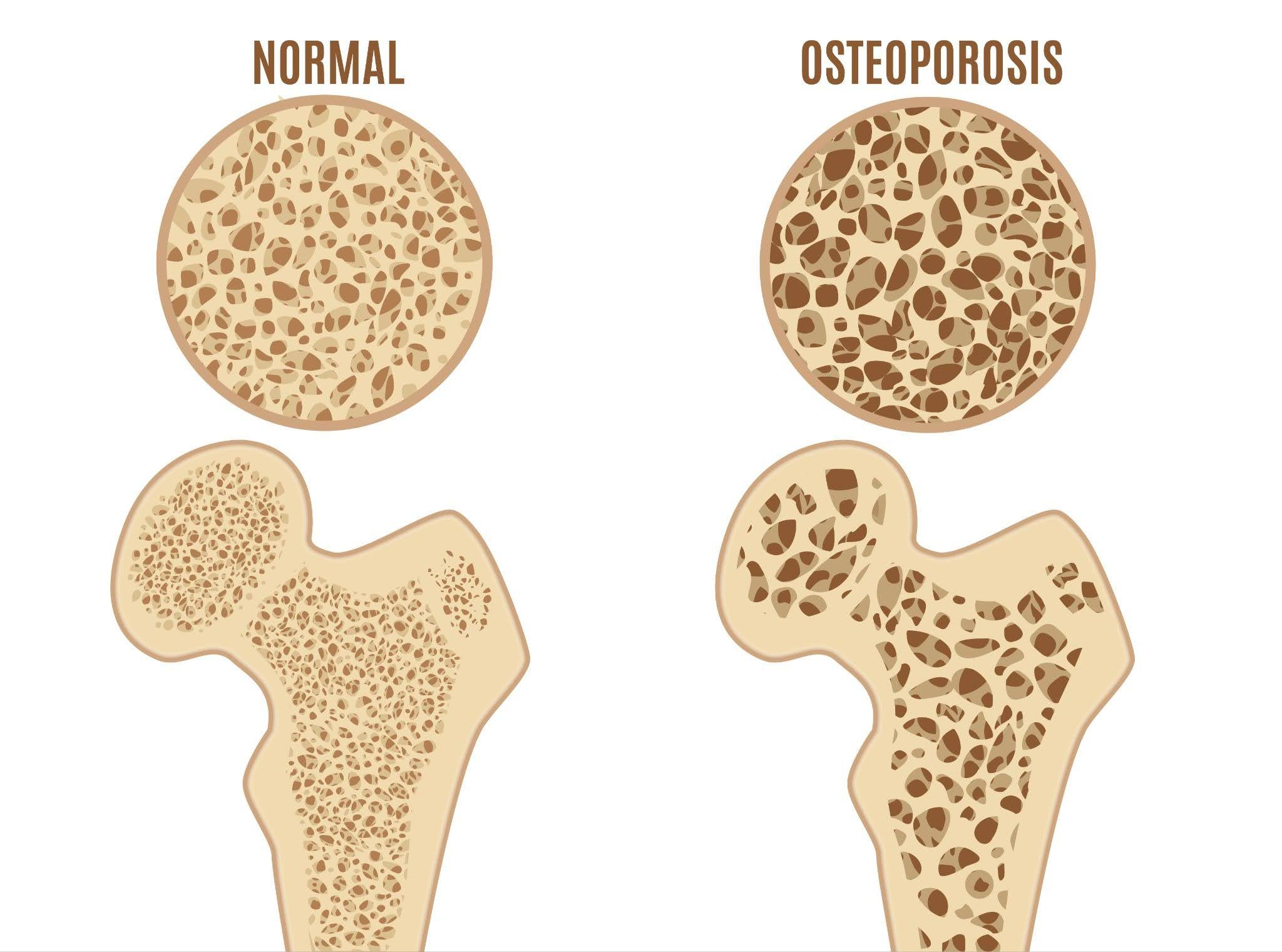
Osteoporosis is a condition in which the bones gradually lose density and strength, becoming more porous and fragile over time. This deterioration happens silently, with typically no symptoms until a fracture occurs, which is why osteoporosis is often referred to as a “silent disease.”
Bone is living tissue that is constantly being broken down and rebuilt. In healthy adults, this process remains roughly balanced. As we age, however, particularly after menopause in women or with declining testosterone levels in men, bone resorption begins to outpace bone formation. The result is a progressive reduction in bone mineral density (BMD).
Common fracture sites associated with osteoporosis include the spine (vertebral fractures), the hip, and the wrist. Vertebral fractures in particular can occur with surprisingly little force, sometimes from nothing more than bending forward or twisting sharply.
According to the International Osteoporosis Foundation, approximately one in three women and one in five men over 50 will experience an osteoporotic fracture in their lifetime. Osteoporosis is often thought of as a bone condition, but the story frequently starts much earlier, in the hormonal and metabolic changes that quietly erode bone health long before any fracture or symptom appears.
Risk factors for osteoporosis include:
- Age (risk increases significantly after 50)
- Family history of osteoporosis or fragility fractures
- Low body weight or a history of eating disorders
- Long-term use of corticosteroid medications
- Vitamin D and calcium deficiency
- Smoking and excessive alcohol consumption
- Certain medical conditions, including thyroid disorders, diabetes, and hyperparathyroidism
As an endocrinologist, Dr. Vikram frequently sees osteoporosis in the context of hormonal conditions, including thyroid disease and diabetes, where bone metabolism is directly affected by underlying hormonal imbalances.
How Certain Yoga Poses Can Increase Risk of Bone Damage

Yoga encompasses a wide range of movements, from gentle stretching to demanding weight-bearing postures. The physical demands vary greatly between styles, and not all poses are appropriate for those with compromised bone density. Several categories of movement deserve particular attention.
Forward Bends
Poses that involve rounding or flexing the spine forward, such as Paschimottanasana (seated forward fold), Uttanasana (standing forward fold), and similar postures, place compressive and flexion loads on the anterior (front) portion of the vertebrae.
In individuals with reduced bone density, this type of loading can be enough to cause a vertebral compression fracture. The thoracic spine (mid and upper back) is especially vulnerable, as it is already under natural forward curvature. Even seemingly modest forward bending with added body weight can exceed the load tolerance of osteoporotic vertebrae.
This risk is not hypothetical. Dr. Vikram, alongside colleagues from Mayo Clinic, co-authored a case series published in the European Journal of Physical and Rehabilitation Medicine documenting vertebral compression fractures occurring during yoga practice, with forward bending postures identified as a key contributing factor in individuals with underlying bone fragility. (Sfeir et al., 2018)
Twists
Spinal rotation poses, such as Marichyasana (seated twist) and Parivrtta Trikonasana (revolved triangle), generate torsional (rotational) forces on the vertebrae. The spine is structurally less equipped to handle rotational stress compared to compressive or extension loads, and this makes deep, forceful twisting particularly risky for those with low bone density.
Twisting movements can also create shear forces at the vertebral joints. In osteoporotic bone, this may contribute to fracture at the vertebral endplates or along the posterior spinal elements.
Gentle, supported twists performed within a limited range of motion are generally considered lower-risk, but deep or ballistic twisting should be avoided in individuals who have been diagnosed with osteoporosis or osteopenia (low bone density that has not yet progressed to osteoporosis).
Inversions
Inverted postures, including Sarvangasana (shoulder stand), Sirsasana (headstand), and Halasana (plough pose), transfer significant compressive load onto the cervical spine (neck). The neck vertebrae are not designed to bear the full weight of the body, and in individuals with compromised bone density, this loading creates a meaningful fracture risk.
Beyond the cervical spine, inversions can also challenge balance and stability. A fall from an inversion pose can result in fractures at multiple sites, including the wrist, hip, or shoulder, all of which are common fragility fracture locations.
Even individuals without a formal osteoporosis diagnosis should approach advanced inversions with caution if they are over 50, have not been assessed for bone density, or have any known risk factors.
Deep Backbends
Deep spinal extension poses, such as Urdhva Dhanurasana (wheel pose) or Ustrasana (camel pose), place the spine under significant extension stress. While extension loading is generally more tolerated than flexion in osteoporotic spines, deep or forced backbends can still create problematic stress concentrations, particularly at the posterior elements of the vertebrae.
Additionally, for individuals with existing vertebral compression fractures (which are often undiagnosed), these postures may exacerbate injury or pain. The degree of thoracic kyphosis (forward rounding) that sometimes accompanies vertebral fractures also limits the range of backbend motion safely available.
Signs You May Be at Risk of Fractures from Yoga
Because osteoporosis develops without obvious symptoms, many people practising yoga do not know their bones are at risk. The following signs and circumstances warrant a medical assessment before continuing or intensifying a yoga practice:
Age and hormonal status. Women who are postmenopausal, and men over the age of 60, face meaningfully elevated baseline risk. If you have not had a bone density scan (DEXA scan) and fall into these categories, it is worth discussing this with a doctor.
Unexplained back or neck pain. Persistent pain in the spine that develops during or after yoga practice, particularly with no history of muscular strain, may indicate an underlying vertebral fracture. Vertebral compression fractures are sometimes mistaken for muscle pain and go undiagnosed for extended periods.
A recent fracture from low-impact force. If you have experienced a fracture from a relatively minor incident such as a minor fall, a bump, or even a forceful sneeze, this is a clinical red flag for fragility and warrants a bone density evaluation.
Noticeable loss of height or change in posture. A gradual decrease in height (more than 2 to 3 cm) or the development of a stooped posture can be a sign of cumulative vertebral compression fractures.
A history of risk factors. Long-term steroid use, thyroid or parathyroid disorders, diabetes, early menopause, low body weight, or a family history of fragility fractures all increase the likelihood that bone density may be lower than expected for your age.
Diagnosis of osteopenia. If a previous scan has shown osteopenia, the stage before osteoporosis, you may not yet have received specific guidance on exercise restrictions. It is advisable to discuss safe movement boundaries with your doctor before continuing poses that load the spine heavily.
Tips for Preventing Bone Damage While Practising Yoga

Get a bone density assessment first. Before making assumptions about your bone health, speak with a doctor or specialist about whether a DEXA scan is appropriate. Knowing your baseline bone mineral density allows for informed decisions about which activities and intensities are suitable for you.
Inform your yoga instructor about your bone health status. A qualified instructor should be able to offer modifications and alternatives. Not all instructors are trained in osteoporosis-specific adaptations, so it is worth asking directly and, if necessary, seeking a class that specifically caters to older adults or those with bone health considerations.
Avoid or modify high-risk pose categories. Deep forward bends, forceful spinal twists, advanced inversions, and extreme backbends carry the most risk for osteoporotic spines. These can often be replaced with gentler alternatives that maintain many of the same functional and flexibility benefits without the same degree of spinal loading.
Prioritise weight-bearing and balance work. Certain elements of yoga practice, including standing poses, gentle weight-bearing through the legs and arms, and balance training, can actually support bone health by stimulating bone formation and reducing fall risk. These components are worth preserving in any modified practice.
Move slowly and with control. Rapid or jerky movements significantly increase joint and bone loading compared to slow, controlled movement. Avoid bouncing into stretches or using momentum to reach a pose.
Do not practise through pain. Pain during a yoga pose, particularly spinal pain, is a signal to stop and seek medical review. Continuing to load a painful or compromised area risks worsening an existing injury.
Maintain bone health through nutrition and lifestyle. Adequate calcium and vitamin D intake, appropriate protein consumption, not smoking, and limiting alcohol all contribute to maintaining bone density. These interventions complement, rather than replace, medical management.
Get Osteoporosis Treatment in Singapore
If you have concerns about your bone health, a formal medical assessment is the most reliable starting point. Osteoporosis is a manageable condition, but effective management depends on an accurate diagnosis, an understanding of the underlying cause, and a treatment plan tailored to your individual circumstances.
At Harmony Thyroid, Endocrinology and Diabetes Centre, Dr. Vikram provides specialist evaluation and management of osteoporosis, including assessment of secondary causes such as thyroid disorders, diabetes, and hormonal conditions that can contribute to bone loss. As a Senior Consultant Endocrinologist, Dr. Vikram takes a comprehensive approach, addressing not just the bones themselves, but the systemic factors that may be driving bone loss.
If you have risk factors for osteoporosis, a history of fragility fractures, or would like to discuss your bone health, we welcome you to book a medical consultation with Dr. Vikram at Harmony Thyroid, Endocrinology and Diabetes Centre.