
Cushing’s Syndrome

Understanding Cushing’s Syndrome Cushing’s syndrome is a condition when the body is exposed to a very high level of cortisol hormone, also known as “stress hormone”. Cortisol, secreted by the adrenal gland, is the most vital hormone for survival. However, the excess levels can cause a lot of medical conditions and complications. Causes of Cushing’s […]
Excess or Deficiency of Pituitary Hormones

Understanding Pituitary Hormone Imbalance The pituitary gland, located at the base of the brain, is crucial in regulating vital bodily functions through its hormone production. This pea-sized, cherry-shaped endocrine gland is often called the “master gland” because it regulates the production and release of various other hormone glands in the body. The hormones it secretes […]
Pituitary Adenoma (Tumour) and Prolactinoma

Understanding Pituitary Adenoma and Prolactinoma The pituitary gland, also known as the “master gland,” is located at the base of the brain. This gland plays a crucial role in regulating vital bodily functions by producing hormones that influence growth, metabolism, and reproduction. Pituitary Adenomas Pituitary adenomas are benign (non-cancerous) tumours that occur on the pituitary […]
Dyslipidemia

Understanding Dyslipidemia (Hyperlipidemia) Dyslipidemia is a metabolic disorder characterised by abnormal lipids, also called cholesterol levels in the blood. Different forms of fat content are essential lipids that play important roles in the body; cholesterol is necessary for cell structure, hormone synthesis, and bile production, while triglycerides are a primary energy source. However, if the […]
Multinodular Goitre

Understanding Multinodular Goitre Goitre means enlargement of the thyroid gland, and when the enlargement is caused by multiple nodular growth it is called multinodular goitre (MNG). Multinodular goitre refers to a condition where the thyroid gland becomes irregularly enlarged due to the presence of multiple nodules. Unlike a simple goitre, which has a uniformly enlarged […]
Type 1 Diabetes

Understanding Type 1 Diabetes Insulin is the hormone that regulates glucose in our body. The carbohydrates (glucose) in our food are the body’s main energy source. Once the carbohydrates are absorbed, glucose levels in the blood rise, signalling the pancreas to release insulin. Insulin is responsible for allowing glucose in our blood to enter muscle, […]
Gestational Diabetes

Understanding Gestational Diabetes Gestational diabetes is a specific type of diabetes that develops only during pregnancy in women who did not previously have diabetes. Gestational diabetes typically appears in the second or third trimester and usually goes away after the delivery, but it does increase the risk of developing Type 2 diabetes later in life […]
Type 2 Diabetes

Understanding Type 2 Diabetes Type 2 diabetes is the most common type of diabetes in Singapore. It is a chronic condition that occurs because of a problem in how the body regulates and utilises carbohydrates (glucose sugar), the primary energy source. Unlike Type 1 diabetes, in which the pancreas produces little or no insulin, Type […]
Fine Needle Aspiration Biopsy
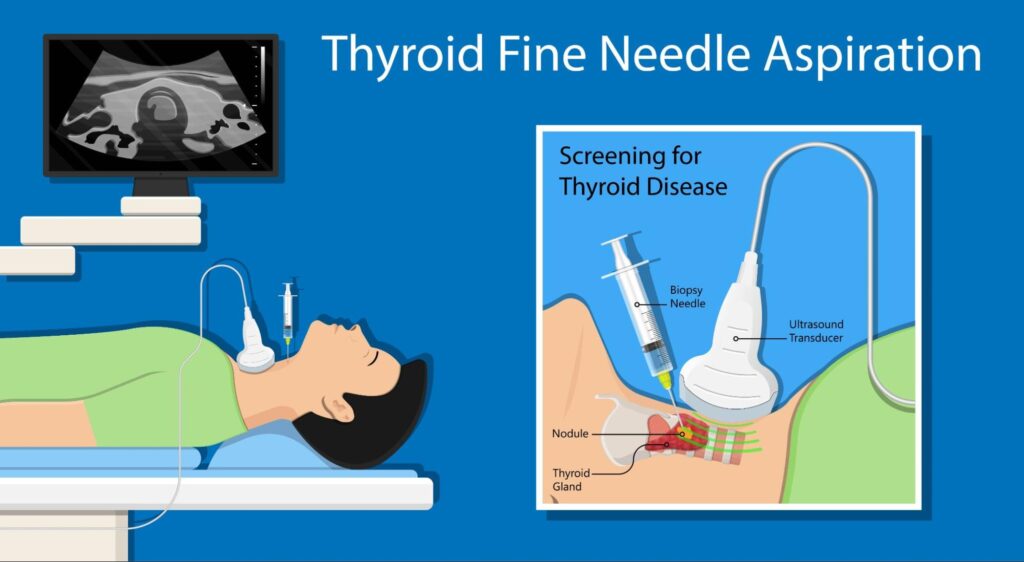
Understanding Fine Needle Aspiration Biopsy Fine needle aspiration biopsy, also known as fine FNA, is a diagnostic procedure used to evaluate the growth or nodule in the thyroid gland. It involves using a very thin needle to extract cells from a nodule for microscopic histological examination. The primary purpose of an FNA is to collect […]
Obesity Weight Management

Defining Obesity and Its Health Implications Obesity is a metabolic disorder characterised by excessive body fat, typically measured using Body Mass Index (BMI). BMI is calculated based on a person’s weight in kilograms divided by the square of height in meters. Singapore uses the following BMI classification system, which differs slightly from international standards to […]